Thursday, January 26, 2012

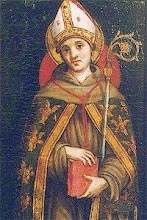
Saints of the Day—Timothy and Titus

All most of us (me, certainly) know about Sts. Timothy and Titus is that they were disciples of St. Paul and the addressees of three letters, two to Timothy and one to Titus. These Pastoral Epistles, as they are called, witness to the development of the church and its ministries. I'm afraid I can't say anything very profound about them, though First Timothy 2:4 does tell us that God "desires all men to be saved and to come to the knowledge of the truth." I take comfort in that when the specters of hyper-Augustinianism and Calvinism flit around my brain. (I do read a fair number of Reformed blogs.)


From the Roman Missal, 3rd edition:
O God, who adorned Saints Timothy and Titus
with apostolic virtues,
grant, through the intercession of them both,
that, living justly and devoutly in this present age,
we may merit to reach our heavenly homeland.
Through our Lord Jesus Christ, your Son,
who lives and reigns with you in the unity of the Holy Spirit,
one God, for ever and ever.


Wednesday, January 25, 2012

Feast of the Day—The Conversion of St. Paul the Apostle

What can I say about St. Paul? In the bookcase on my left as I write this are more than a dozen books devoted exclusively to the Apostle to the Gentiles, and that's probably only a tenth of a tenth of a tenth of a tithe of of the books that have been written about him (the WorldCat lists 14,124). He's one of my principal patrons (Paul is my middle name), and as a convert myself, I'm particularly drawn to this feast.

My conversion was nothing like St. Paul's: no horse, no vision, no monitory blindness, no sudden 180-degree change; Forty-two years out of the font, it seems like I'm not very far down the road, and sometimes I'm not too sure in what direction I'm walking.

The second lesson for the Office of Readings (what used to be Matins) for today is from a sermon by St. John Chrysostom. Here is an excerpt:
The most important thing of all to him, however, was that he knew himself to be loved by Christ. Enjoying this love, he considered himself happier than anyone else; friend of principalities and powers. He preferred to be thus loved and be the least of all, or even to be among the damned, than to be without that love and be among the great and honored.
To be separated from that love was, in his eyes, the greatest and most extraordinary of torments; the pain of that loss would alone have been hell, and endless, unbearable torture.
I'm still trying to learn how to love Christ, and I'm still trying to know, in my heart as well as my head, that he loves me.

From the Roman Missal, 3rd edtion:
O God, who taught the whole world
through the preaching of the blessed Apostle Paul,
draw us, we pray, nearer to you
through the example of him whose conversion we celebrate today,
and so make us witnesses to your truth in the world.
Through our Lord Jesus Christ, your Son,
who lives and reigns with you in the unity of the Holy Spirit,
one God, for ever and ever.

Tuesday, January 24, 2012

Saint of the Day—St. Francis de Sales, Bishop and Doctor

My personal associations with St. Francis de Sales are few. Though his Introduction to the Devout Life had a certain vogue among Anglicans, I have never been attracted by its piety, which seems to assume one has the lifestyle and the leisure of a (female) member of the sixteenth-century French nobility. I must admit to having an unread copy of his Treatise on the Love of God on my bookshelf. (Since he is a doctor of the church, I suppose I ought to be more responsive). But I have long admired his evangelistic efforts as Provost and then Bishop of Geneva (in exile). And one day, while I was browsing in the late lamented bookshop at St. Francis of Assisi on Thirty-second Street, the lady behind the counter told me I looked like our saint, pointing me to the picture on the cover of a volume of his Lenten sermons. In so far as we were both bald and bearded, there was a resemblance.

The old Catholic Encyclopedia says of St. Francis's ministry among the Genevans:
From the time of the Reformation the seat of the Bishopric of Geneva had been fixed at Annecy. There with apostolic zeal, the new provost devoted himself to preaching, hearing confessions, and the other work of his ministry. In the following year (1594) he volunteered to evangelize Le Chablais, where the Genevans had imposed the Reformed Faith, and which had just been restored to the Duchy of Savoy. He made his headquarters in the fortress of Allinges. Risking his life, he journeyed through the entire district, preaching constantly; by dint of zeal, learning, kindness and holiness he at last obtained a hearing. He then settled in Thonon, the chief town. He confuted the preachers sent by Geneva to oppose him; he converted the syndic and several prominent Calvinists. At the request of the pope, Clement VIII, he went to Geneva to interview Theodore Beza, who was called the Patriarch of the Reformation. The latter received him kindly and seemed for a while shaken, but had not the courage to take the final steps. A large part of the inhabitants of Le Chablais returned to the true fold (1597 and 1598). Claude de Granier then chose Francis as his coadjutor, in spite of his refusal, and sent him to Rome (1599).
I am a bit skeptical about Beza's near-conversion, however.

Because of his pamphleteering, he is the patron of writers and journalists (not of editors, though that saint was a Salesian, St. John Bosco), and therefore one of mine. Because he taught the faith to a deaf man through sign language, he is also patron of the deaf.

From the Roman Missal, 3rd Edition:

O God, who for the salvation of souls

willed that the Bishop Saint Francis de Sales

become all things to all,

graciously grant that, following his example,

we may always display the gentleness of your charity

in the service of our neighbor.

Through our Lord Jesus Christ, your Son,

who lives and reigns with you in the unity of the Holy Spirit,

one God, for ever and ever.


Sunday, January 15, 2012

Spleen—Ecclesiastical, More Music Edition

For Part 1 of this series, see below.

After last week's post, I thought I was done venting about church music, but I was wrong. So here I am, bile ducts aquiver, ready to fulminate again.

4. Stuff That In Your Peace Pipe and Smoke It. Today at church we turned from the Christmas/Epiphany repertory back to the usual stuff; you know, the stuff that hardly makes it to mediocre. Here's the lineup:

  1. Entrance "hymn": "Gather Us In"
  2. Offertory: "At the Table of the World"
  3. Communion: So lame I can't remember which, but I think one of them was by David Haas. 'Nough said.
  4. Parade to the door: "They'll Know We Are Christians by Our Love"
So after working up the "courage to enter the song," we ask the Holy Spirit, "hurricane and breath," to "take us on a journey of love." I can't say that hurricanes have much sacred resonance for me; the journeys they usually take folks on are often detrimental to their health. And anyway, going on a "journey of love" is about as meaningful as entering "the song."

But, as is so often the case, the best (or in this case the worst) was saved for last: the incomparable "They'll Know We Are Christians by Our Love". The passage of time has not dimmed the luster of this 44-year-old classic. I remember commiserating with a friend (now a priest) about the horrors of this one back in the day, when it was fresh from the composer's pen. I think of it as "The Tom-Tom Song." It is the sort of thing that used to be sung in those Hollywood horse operas so unfair to native Americans. Remember them gathering around the fire, tomahawks in hand, and dancing with up-and-down arm motions to the beat of the drums? Its relentless rhythms, its breathtakingly banal lyrics and its rather smug self-satisfaction (after all, it's all about us, isn't it?) make it a strong contender for Bonaventura's Worst Liturgical Song Award.

Some Sunday, when I haven't taken my meds, I'll bring a headdress and a rubber tomahawk to church, just in case. And if and when the organ introduces The Tom-Tom Song, I'll be ready.

To be continued, but not, I hope about music. . . . 


Tuesday, January 10, 2012

Spleen—Ecclesiastical, Music Edition

I've been meaning to write this post for quite a while. Almost every Sunday afternoon I come back from the 11:00 am mass in, at the best, a mood of resigned unhappiness and, at the worst, a simmering rage. Many's the time I've vowed never again to darken the door of the local chapel-of-ease where we usually go on Sunday mornings. So far, I've thought better of it. The congregation is made up (mostly) of people from our neighborhood, and it's good to be able to greet people on the sidewalk or in the subway with whom you've worshiped on Sunday; the kids are used to it, and besides, it's impractical to schlep them around town on Sunday morning (been there, done that); and we usually aren't scandalized by what we hear from the clergy. This Sunday, though, was different. I won't go into much detail because (1) I don't want to embarrass anyone, and (2) I'm not sure I entirely followed what was being said. But suffice it to say that Father's take on the mystery (or, to use his word, "legend") of the Epiphany was somewhat out of the ordinary.

So, in order to purge my choler, I'm presenting an omnium-gatherum of the things that have grated on me through the years. I'll start today with music. Here are my first three rocks of stumbling. I know many others have been bothered by these or similar things for years, but, hey, it's my blog and I'll whine if I want to.

1. Sing along with Ms. Mitch. Complaining about Catholic church music goes back a long way. I'd hoped that Thomas Day's Why Catholics Can't Sing, twenty years old this year, would make a difference, but in these parts, at least, things haven't changed. A cantrix looks out meaningfully over the congregation, tells us that the melody of the psalm refrain isn't the one in the book (often with an unnecessary explanation) and goes on to warble a tune that makes Milton Babbitt sound like Gounod. She instructs us (twice) on where to find the hymn (or "worship song"), and which two out of five verses we're going to sing. (Why do Catholics assume that only as much of a hymn should be sung as is necessary to get the priest to and from the altar? Aren't we singing to worship God?) I reached my limit last Sunday when her instruction on singing the acclamation broke through the midst of the Eucharistic Prayer, taking with it whatever recollection I'd managed to attain. Has it never occurred to anyone that having someone standing in front of you singing at you through a microphone is not the best way to encourage your participation? And our parish is by no means the worst. At least there's no arm-waving, and the gain isn't pushed up to ear-bleed levels.

2. Gather Me Out. Let's face facts, people: No one has written a good hymn since Ralph Vaughan Williams. What passes for hymnody today are ersatz folk songs, campfire favorites, pseudo-Broadway showstoppers, and Las Vegas lounge numbers. Every time our organist sits down at the piano to tickle the ivories for a David Haas classic, I always look to see if there's a brandy snifter set out for tips. And in addition to the inappropriate-to-worship and unsingable melodies (the funereal accompaniment and wandering cantorial pitch don't help), there are the words.Why do we spend so much time telling the Lord who we are and what we're doing/going to do? Why do we exhort and/or congratulate ourselves in persona dei? Why do we ask for unintelligible things ("Give us the courage to enter the song")? Why are even the old standbys defaced with politically correct maunderings and awkward changes in diction. I can picture the offices of OCP, WLP, GIA, etc., with row upon row of eagle-eyed former nuns in Birkenstocks, blue pencils in hand, ruthlessly removing masculine pronouns from the church's hymnary (sorry, I mean personary).

3. Cue the Applause. Our parish is overwhelmingly Spanish-speaking and working class. e have two choirs, one for the Spanish masses and one for the English masses. It is very difficult to recruit people for the English choir, and most of the singers have had little musical training. The choir sings on alternate Sundays in our chapel and in the parish church. It has a limited repertory; besides the hymns, the choir usually sings one of its four or five pieces (which range from "I Come to the Garden Alone" to "Jesu, Joy of Man's Desiring") after communion. Aside from the fact that a choir piece is better placed during Communion, with a hymn after Communion when people can look at their "worship aids," the singing is more performance than prayer. As such, it's usually followed by applause. Now, my Much Much Better Half likes to cite Miss Manners on the impropriety of applause in church: Everything in church is done for God, and He'll applaud if He wants to. (Sorry. Make that "Everything in church is done for God, and God will applaud if God wants to." Feel better now?)

To be continued.

Sunday, January 8, 2012

On the Cusp of Ordinary Time

A belated merry Christmas and happy New Year to all.

The twelve (or fourteen, according to the US ecclesiastical calender) days of Christmas have been busy ones at the Bonaventura household. Not much progress on the soul's journey, I'm afraid (though that long Christmas Eve confession was a step in the right direction). The Eldest Oyster, who hadn't been home for Thanksgiving, came down from college for an all-too-short visit (she's going home tomorrow). The in-laws arrived on Boxing Day and headed home on the 30th. Christmas dinner was wonderful, thanks to my Much Much Better Half and Daughter Number Two, who's the queen of desserts and made a chocolate, meringue, and mint chocolate chip ice cream Bûche de Noël. My only regret is that I had but one piece.

Last week was taken up with an intense, frustrating, and as yet unresolved struggle with the healthcare bureaucracy. More on this (maybe) anon.

All told, 2011 was a tough year chez Bonaventura. And while there's an uncertain and probably difficult road ahead, I, at least, am glad to be done with it. May there be sunnier days awaiting us!


Tuesday, December 20, 2011

A Face in the Crowd

I see that as Ron Paul's Iowa numbers rise, the old story of his 1980s and '90s newsletters has reappeared, this time in The Weekly Standard. For those who may have forgotten, Paul had an (apparently lucrative) newsletter business during the period in question; a good deal of outrageous (racist, conspiracy-mongering, "anti-Zionist") material appeared in these newsletters. Paul claimed that this material was published without his knowledge, that he was angry when he found out about it, and that these items do not represent his views. (Even if he's telling the truth, that doesn't say much for his executive abilities.) As might be expected, the pro-Paul folks have denounced this "sad neocon hit piece," complete with lists of names (many of them Jewish) of The Weekly Standard's writers and editors and comments on their zeal to have America fight "their" (read "Israel's") wars for them.


Paul is an interesting phenomenon, an exponent of both a fundamentalist libertarianism and a paleoconservative isolationism. He has a fondness for conspiracy theories, as all too many paleoconservatives had and have. Among the latter, in the 1930s it was the conspiracy of the Jewish Bolsheviks and bankers (what are a few pretend political differences among Jews?) and their gentile tools to get the U.S. into a war in Europe, a conspiracy that reached its zenith when FDR (who these same folks alleged was a secret Jew) maneuvered the Japanese to attack Pearl Harbor so that he could declare war on Germany. In the postwar period, among the heirs of the old American right, it was a strange combination of fear of both domestic Communist conspiracies and "entangling alliances" broad, often laced with  "anti-Zionism," and on the fringes, with Holocaust Revisionism (which began soon after the war).

Now, I don't know that Congressman Paul himself subscribes to the old-right position in all its details (though he seems to receive a lot of support from the followers of Willis Carto and has appeared in his publications). But Paul represents a certain mindset that is uncomfortable with the messiness of most human affairs; that sees (usually sinister) human intent in most of the bad things that happen in the world. For traditionalist Catholics, it's the Jews and the Masons; for the plebeian right, it's the "ZOG" and its racially inferior tools; for many on the left and the right, and apparently for Paul, as for his pal Alex Jones, it's the CIA and the Mossad and the Federal Reserve.

What appeals to many about Paul, I think, is what's seen as his honesty and directness. He opposes our imperial wars (how many are we fighting today?), the burgeoning domestic security apparatus, the increased regimentation of both the economy and of civil society. He may be right about one or all of these things. And even if he's wrong, you know that he's consistent, unlike the rest of the Republican field. But I think that clarity is bought at a very heavy price

It's perhaps the saddest commentary on the current state of the Republican Party that the only candidate around who seems to energize some at least of its cadres reminds one of no one so much as Charles E. Coughlin.